

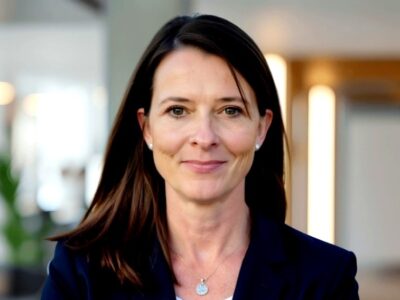
Artificial intelligence (AI) has already become a tool in social work, like in most workplaces. Given the impact social work has on so many lives, Dr. Elisa Borah is seeking insights from our field’s client-facing practitioners to learn where, how, and to what effect AI is having.
A research professor at the University of Texas at Austin’s School of Social Work and the director of the Moritz Center for Societal Impact, Borah is exploring AI usage in social work and how and where social workers think it can best be used to support ethical care. This fall, she launched the Survey on the Use of AI in Social Work in partnership with the National Association of Social Work (NASW), a national survey addressing through two main questions: “How is AI being used across social work practice areas? “and “What types of support do social workers need to ensure it is used effectively and ethically?”
While drafting the survey, Borah focused on direct-service contexts in social work: health care, schools, substance use treatment, and other areas of direct practice. Approved by UT Austin’s IRB, the study invites practicing social workers to chart which AI tools they are using, for what purposes, and where support (such as training, guidance, resources) could improve their work while honoring the profession’s code of ethics. The survey is designed to learn how the profession can best shape the technology, rather than be shaped by it.
“I think AI will play a large role in the future of our profession,” said Borah. “Often times, we find that people worry about how AI may affect care systems, but I want to focus on how we can harness it to improve care and accessibility, how it can support social workers so their caseloads become more manageable; we can harness these tools to improve our efficiency and have a greater impact for those we serve.”
To reach a national audience, Borah initiated a partnership with the National Association of Social Workers (NASW) and NASW CEO Anthony Estreet, Ph.D. Also interested in learning how AI can be best integrated into the profession, Dr. Estreet agreed to have NASW distribute the survey to its state level chapters through newlsetters and social media.
As of December 16, more than 700 social workers nationwide have responded, with the survey open through year’s end. Early insights will be shared in January at a Moritz Center Lunch & Learn event featuring Borah, with fuller analyses and publications slated for late spring 2026. NASW anticipates the findings can inform its policy on AI, and Borah anticipates the study will add to the growing knowledge base on use of AI in social work.
“We’re hoping to gain insights on geographic patterns, adoption rates across practice types, trends on AI use, and what practitioners want AI to do next,” Borah said. “We want to hear more from those in frontline, direct-service roles across settings. Their voices matter, so that we ensure that AI is used in responsible, client-centered ways that support effective and ethical care. ”
The survey can be accessed here through December 31.